My name is Joan Tilmon. I was Jim Tilmon's wife for nearly 33 years. Although his earthly life came to an end in January, 2021, I believe his life and words can and will continue to inspire others. Belief was a primary cornerstone of Jim's life. Explore the power of belief in yourself and others by hearing and reading Jim’s words in the posts on this site. Learn what ideals helped form his character and propel him to reach for and achieve his lifelong dream, and so much more.
Hey, you know, I wonder how often we make a mistake of thinking we see everything, because we take one look and we make an assessment about the value of it, or whatever else. Think in terms of the day I first flew a commercial airplane from the ground underneath a cloudy, dull, dark sky, right through those clouds to topside looking straight out at the clouds, or maybe even looking down on them, and basking in marvelous, beautiful sunshine.
That was a day I could make a mistake in thinking that it was really a cloudy, awful day. Actually I just had a lack of real perspective as to what was really going on. We do that all the time, don’t we?
You know, when I was in flight school with the airline, I had two instructors – one, the Captain and one was the Flight Engineer. These two gentlemen, in Texas, had the drawl and the sound of the typical Southerner person who I had grown up thinking was not really in my corner. Turns out, Cy and Randy were the two nicest, most professional gentlemen I ever had a chance to fly with. They were wonderful, they were warm, they were helpful, they were everything that you could ask for, and more.
Sometimes we can make drastic errors simply because we’re not able to really see the other side. When we have a discussion with somebody, I wonder how many times we make a mistake of not giving their side a fair shake. Just like those clouds in the sky, that gave us a false impression about what was really going on, can make us misunderstand things.
The same thing is true of issues on the ground. I’m advocating that we take a good, hard look at the other side of every issue. But, don’t be deceived. If you see the other side and you don’t like what you see, if you’re seeing outright lies, disregard for others, and deceit, threats, bigotry, nefarious activity, it’s totally wise and fair to decide to move right along toward the sunshine of understanding.
It’s important to remember that that sun shines every day no matter what, whether we see it or not. And the refreshing enlightenment that it brings is worthy of our attention every day.
In aviation we’re taught to pay attention not only to what we are saying but do all we can to make sure that the person on the other end of that communication clearly understood what it was that we were saying and what this was all about. Confusion has no place in the skies.
“American 276 garbled words and more garbled words 266.4, over”. You will hear that and then you will hear, “This is American 276. Say again all after American, over”. You really want to make sure you understood what was said. We’re taught to be keenly sensitive to accurate and easily understood communication. There’s to be no confusion about “American 276 climb to and maintain flight level 330, over”. That is immediately followed by an answering communication. “Roger, Center, American 276 climbing to flight level 330.” An accurate clear and concise transmission answered by an equally accurate and clear response. All this is critical to the safety of flight.
Today, many of us fail to be true to those standards as we communicate with others. To begin with, our initial communication may be unclear and confusing, and we often have very little knowledge about how accurately that is received and understood. The use of social media with its written emails and tweets, and all, texting, is often devoid of essential elements that will allow all who receive to truly fully understand. Since most, if not all, of these are transmitted without the aid of a human voice the emotion and tone of the transmission leaves a great deal of room for interpretation by the recipient. Sometimes this can lead to confusion and misinterpretation that can be as disastrous as it would be in air traffic. Sometimes the results can be catastrophic even if in no other way than irreparable damage to important relationships.
There are some so-called leaders who actually take pride as they brag an acknowledgement that they are blunt and to the point. They say what they want to say with very little feeling or concern for the way it may be received. Since it is often with little or no empathy or compassion, they often leave the recipient feeling hurt or confused. These “blunt” people will tell you, “Okay, it was taken badly. But that’s just the way I am.”
A wise man once told me that when he hears a person say those words, he wonders if they recognize that if that’s the way they are, would it not be worthwhile for them to simply change the way they are? As a child I was taught to think carefully about what you are about to say to someone else. Quickly predict how that is likely to be received. Then, and only then, is it wise to speak. In short, what does it take to consider someone else’s feelings as we express ours? I have discovered that it takes very little effort or time to frame our conversation in such a way to be the least offensive and insulting and still make our point.
I was moved to share this with you as an acquaintance of mine who held a managerial position made comments about work I had performed in a way that was emotionally painful and downright insulting. It was obvious to me that there were a number of words and phrases that could have been used that would have left me feeling that we had a wholesome relationship and join me in a mutual effort to achieve goals he considered important.
Hey, listen. Whatever happened to being cordial and demonstrating respect for other people? Is this the new and modern approach toward rapidly getting things done with a total disregard to the potential damage we’re inflicting on other parties? If that’s the way of today and tomorrow, I would like to suggest that we go back to that advice we got; Change!
First of all, remember the requirement for accurate transmission and reception as used in Air Traffic Control? And when the words are written, acknowledge the importance of writing them in such a way that you are accurately stating something with words that will protect the accuracy of your message without incurring unnecessary misunderstanding, confusion or pain on the recipient.
Am I making too much of all this? Not only “No”, but “Heck No!” As our world shrinks and our relationships become more complex and important, remembering the basic rules of communication gets more and more significant every day. One other thing that I was told was one of the values of speaking in person is to remain alert to the effect your words have on another person. Whether you’re speaking to one person or an assembly of a thousand, tailor how you communicate as you read the facial and body language evident in response to what you have said and the way you said it. If you truly don’t care how your communication is being received, then be prepared for the inevitable results.
So, speak clearly but think first and you are likely to enjoy positive relationships consistently throughout your life. And, trust me, relationships like that can go a long way toward making it possible for all of your flights to end with a happy landing of success and understanding.
You gotta be flexible. I had this dream about flying for the military someplace, because I didn’t have the money to go out and buy flying lessons. So the military was the way to go. And I was so pleased because when I got to Tennessee State University and I had a chance to enroll in the Air Force R.O.T.C. it meant that I could, in fact, get to fly for the Air Force. All I had to do was just finish the sophomore year which I did. I was called into the office of the colonel who was in charge of the R.O.T.C. program there. And he said,” I just called you in here because I wanted you to hear it straight from me.” And I figured he was going to give me some kind of special award. It wasn’t like that at all. What he said was, “I’m not going to recommend you for Senior R.O.T.C. The reason I’m not going to do it is because you lack the aptitude and the intelligence to be a modern jet pilot. I was crushed. You can imagine what it felt like for me. This came out of left field. What did I do wrong? I never failed any exams. I was one of the best cadets in the whole university. I mean, how could, how could this happen? It sounded like that was the end. But it couldn’t be. It couldn’t be because I wanted to fly and I was going to find some way and I had to be able to make adjustments. Whatever I had to do I was going to do.
So, I transferred universities and I ended up at Lincoln University in Jefferson City, Missouri. And I knew they had R.O.T.C. and that was going to be great. Just one problem. They had R.O.T.C. alright, but they didn’t have Air Force R.O.T.C. They had Army R.O.T.C. And then somebody said, “Hey Jim, don’t worry. The Army has airplanes, too. You could become and Army Aviator.” Hey well, okay. That’s it.
So, I went down to the R.O.T.C. department when I got to Lincoln and I met the gentleman who was in charge of the program. That Air Force guy was a White guy. This Army guy was a Black guy. Anyhow I went in to meet with him and he looked at my records and he said, “Well, I’m sorry to tell you, you know, you don’t have the prerequisites to be in Army R.O.T.C. We are not just the Army R.O.T.C., we are the Army Corp of Engineers. Combat engineers at that. Our students are students that are engineer majors and at least physics or some sciences. I looked at your records. You’re a music major! Is this a joke?” “No, sir, this is not a joke.” I literally ended up kind of halfway arguing with this colonel until finally he said, “Okay, that’s it. We’re right now involved in Bridging, and this is the toughest course we have in R.O.T.C. I’m going to let you in. But you have to understand that there’s no way for you to pass it. I said, “That’s alright, sir. I appreciate it.” And I saluted and left. And as the story goes, I ended up one of the top students in that class.
I passed Bridging and ended up getting a commission in the United State Army Corps of Engineers … and, learning to fly.
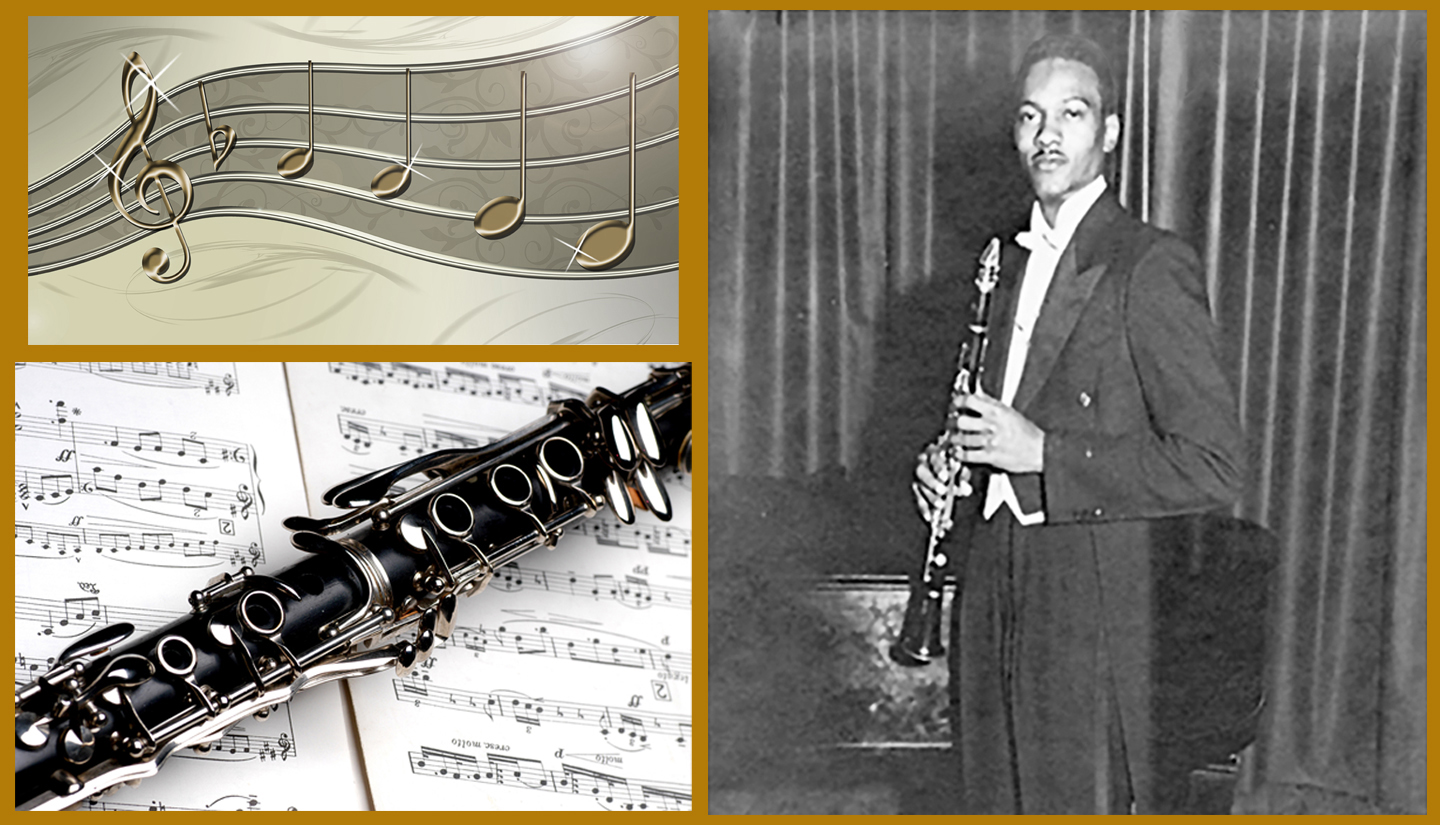
My music life started literally seated at my father’s feet as he played the piano. I was fascinated that such incredible sounds could come out of this unusual piece of furniture. Don’t ask what my age was. I don’t know. It’s like it’s always been there. I could imagine that my birth was accompanied as I heard the angels sing. Before you toss that all away with my obvious attempt to give more significance to my birth than it is due, just know that I hear music every waking moment of my life and it’s been that way as long as I can remember. Whatever I am hearing in my head is quickly and completely silenced in favor of the music in my ears. To me, music is everywhere. Have you ever sat quietly on a Spring day and enjoyed the music of the wind whistling through the trees? Have you ever been mesmerized by the sweet sounds of one songbird singing to another? If the answer is “no”, please give yourself a special seat at Mother Nature’s concert. During my childhood I learned to play the clarinet. It just seemed to have a wonderful, natural warm sound and it struck me as being a beautiful way to make music.
I played competitive clarinet in music festivals throughout my high school years. My clarinet was my most reliable, loyal and trustworthy companion. When I began to socialize and date girls I often heard “You don’t care much about me. It’s just your clarinet that is your most intimate companion!” To that I would just smile and try to assure my friend that she was important too. Frankly, I probably was not very convincing. I performed in high school marching bands and concert bands. I went to college and majored in Chemistry because my father wanted me to be a doctor. It was his personal lifetime dream and he had looked forward to the day his two sons would have the initials “M.D.” behind their names. That was never to be for my brother or for me. A dispute with the head of the Chemistry department at Tennessee State A & I University was all it took for me to change my major to music. I later became the concert master of the university’s concert band. I won’t bore you with all the details of the rest of my college career. I will simply say I carried my clarinet with me everywhere I went and do so even today.
Today, my wife was playing a video recording of a wonderful symphonic orchestra performing Ravel’s “Bolero”. To say I was captivated and inspired would be an understatement. I challenge you to play a video of that composition with your stereo speakers at a relatively high volume. Concentrate on the wonderful pace of that music’s beginning that is strong but relatively quiet. Ravel understood the magical power of musically building intensity and emotion from beginning to end of that marvelous composition.
If you have never had the privilege of playing an instrument in a performing symphony orchestra, please let me share with you some of my feelings about the experience. You sit on a stage, all around you there are super talented individuals, masters of their chosen instruments. They’re sitting side by side. They may not speak the same spoken language. They may have different nationalities or ethnicities, but they are working together. They are combining their individual understanding of a composition and working under the direction of one person called the conductor. Together they are performing as if all of that combined sound comes from one single instrument called the orchestra. If you are playing the video, take a look at the body language of the musicians, see them physically respond to the demands of the music. See if you can feel at least some of what they do. I cannot describe the emotional fulfillment and thrill of performing with such a talented and diverse group of people.
But let’s not limit our understanding of musical instruments without acknowledging the divine sound of the human voice. Occasionally composers will write music that combines the sounds of a symphony orchestra with the natural beauty of a choir. Each complementing and accompanying the other. From time to time the composition will demand separate solos from specific mechanical instruments and a human voice. Your entire emotional being can be caught up and mesmerized in ways that can only be called magic.
Don’t misunderstand me. I have no desire to restrict my definitions or feelings about the world of music to only that of the recognized masters. Music is great in any form. Whether it is Reggae, Rock, R & B, Ravel or Country, it’s great and moving. There are so many stories that cannot be told by any means other than the lyrics, harmonies and rhythms of music. One can honestly say music offers something for everybody. It does a wonderful job of defining and entertaining a wide variety of people from diverse cultures. I know of no other way so much can be accomplished so easily.
I studied music under the instruction of the head of the music department at Lincoln University in Jefferson City, Missouri. He was famous for a lot of things. One of the many statements he made that I remember is as follows: There are three types of musicians. The first type is the composer. Without his genius in feeling and understanding sounds and documenting them in some fashion, there would be no man-made music. The second type is the performer. What good is it to have these wonderful ideas available to use if no one performed them? I was surprised to hear Dr. Fuller say the most important and necessary musician is the listener. He said if there was no one available to appreciate these wonderful sounds they would have limited value. In short, you may be a highly talented musician and not know it.
I believe music is the universal language of the soul. It is not owned or expressed by any one person, group or nation. It seems that whether it is the melodic songs of the birds or it is the expression of over a hundred super talented orchestral musicians, one can only wonder if all of this is God’s gift to all living things. Enjoy!
What time is it? The word time truly represents the most significant item that influences all of our lives. I know you probably don’t think of it very often but it really applies to almost everything there is about us. It’s a measurement of everything we do, we hope for and we try to control. I’ll bet before I finish this blog you may have more insight and understanding than you have ever considered before. We need to address a definition of time, we are actually controlled and tested and evaluated by time. If we think of some common phrases that we use in our everyday life it becomes clearly evident about how important it is to. What time were you born? What time will you die? As we look at everything that occurs between those two it somehow may shed some appreciation for defining the value we have brought to this earthly form.
We understand and accept the obvious fact that there may be a wide variety of conclusions depending upon so many variables, not the least of which, our point of view. It’s one of the few things of great significance that we are awarded at birth regardless of who we are and what promises to be our station in life. We learn very early something about what it is and what it means to us. In many, many ways it’s a very individual and personal thing. It’s time to change my diaper. It’s time to go to bed, dear. What time must we wake up tomorrow? What do we plan to do with our time today? How long will it take to learn a new skill? I will love you ‘til the end of time. At my age will I have time to bolster my legacy? I could go on and on but that might take a lot more time that I have allotted to finish this blog. And heaven knows you only have so much time to give to my thoughts on the subject. But if you’ll give me a few more moments I will share my thoughts with you about the subject of time.
I believe that time is totally mortal. I mean by that, if you believe in an afterlife, time will probably have no real value to you. After all, we mortals cannot live without it. Its definition dominates our lives, but what if you had no place to go, no need or desire to make changes, no nights and days, weeks, months, years to measure, etc., things would just happen, wouldn’t they? I confess that I really do struggle to comprehend what I’m talking about because my brain is wired to deal with time in some way every moment of my life. Afterwards, who knows? I do know this. It is smart to use it wisely. It’s a precious thing that we must protect because we don’t know how much of it we have. By some measure I have lived a long time, probably much longer than most. I pray that I have made use of the time that I have had to do something towards making this a better world beyond what I found when I got here.
You may not want to thoroughly and honestly examine what you have done with your time to date. Some, through close examination may seem to use their time putting one foot in front of the other and wake up every day as if it was the same as the day before with no real hope or plan for making something real and significant happen before we close our eyes to sleep. For some their long range planning for what they will do with their time is what will we have for supper, how will we spend the weekend and I can’t wait for vacation because then I will have time off for a while. Others may make detailed plans about what they will do from this moment forward with the time they have before the end of life. Generally, these are people that manage somehow to avoid frustration and impatience as they move along a line they have drawn for themselves culminating in the time they may close their eyes forever. Does that sound depressing or fulfilling? Because if we do a good job of all that, the moments before the lights go out for us may be happy feelings of accomplishments, such as saying “I have spent this life doing the best that I could for myself and those I care for and I have managed somehow to enjoy it and succeed in making it possible for those I leave here to enjoy their time on this earth even more than I have”.
Should we be thinking those thoughts regardless of where we find ourselves on the timeline of life? Should we be planning to make the most of every moment that we have to best satisfy our most precious goals in life? My father was an educator and from time to time he would suggest some students attend school intent on learning all they can while others simply are matriculating. They may have a perfect attendance record and that may be the only achievement they reach before graduation. I don’t know about you, but my desire is to be involved in life and living, in contributing and relating with those I share this journey with. I have no desire to simply matriculate. I simply want to make the most of the time I have been granted so that those who have known me will measure my life by my deeds I have accomplished, by the love I have shared and the faith I have lived with from the beginning to the end.
I hope that you will give some thought to what you would like to do with the time you have. And I hope you will find some comfort with the knowledge that you can enjoy most, if not all, of your life if you are willing to take nothing for granted but rather will maintain a positive attitude that you deserve to be here and you have all the tools you need to accomplish all your dreams if you will just believe. Thank you for taking the time to visit with me and hear my thoughts.




 Jim Tilmon - Believe It!